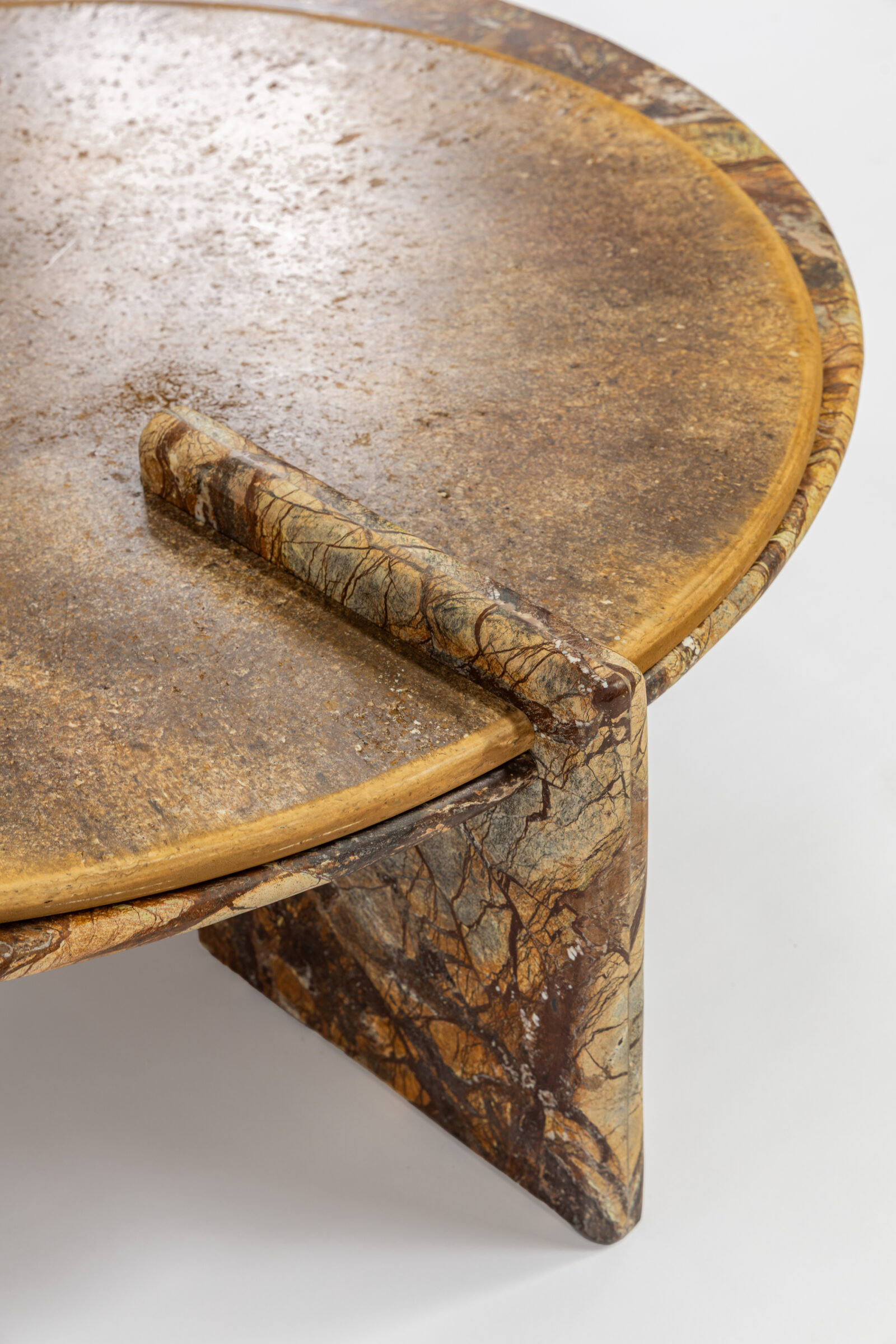
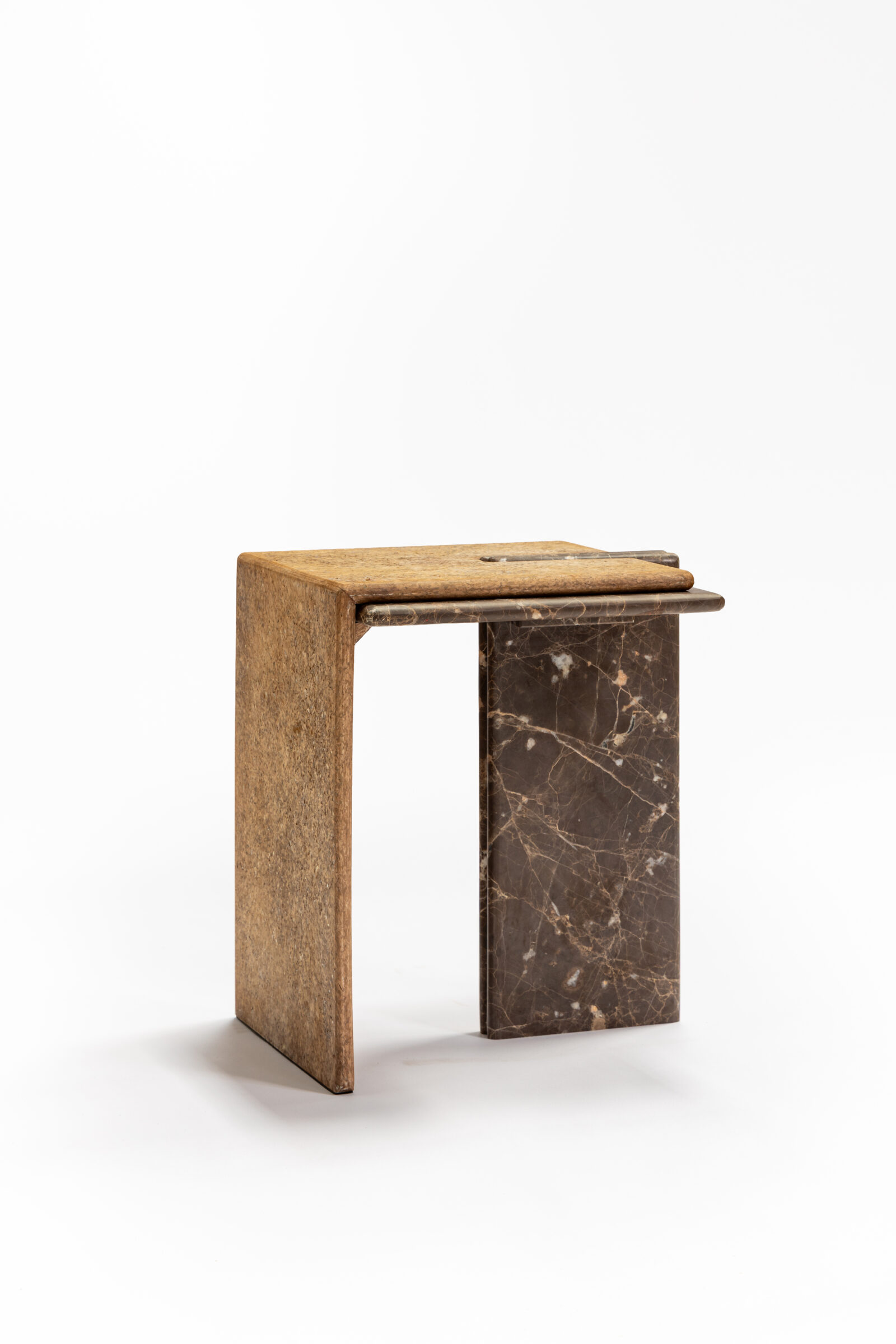
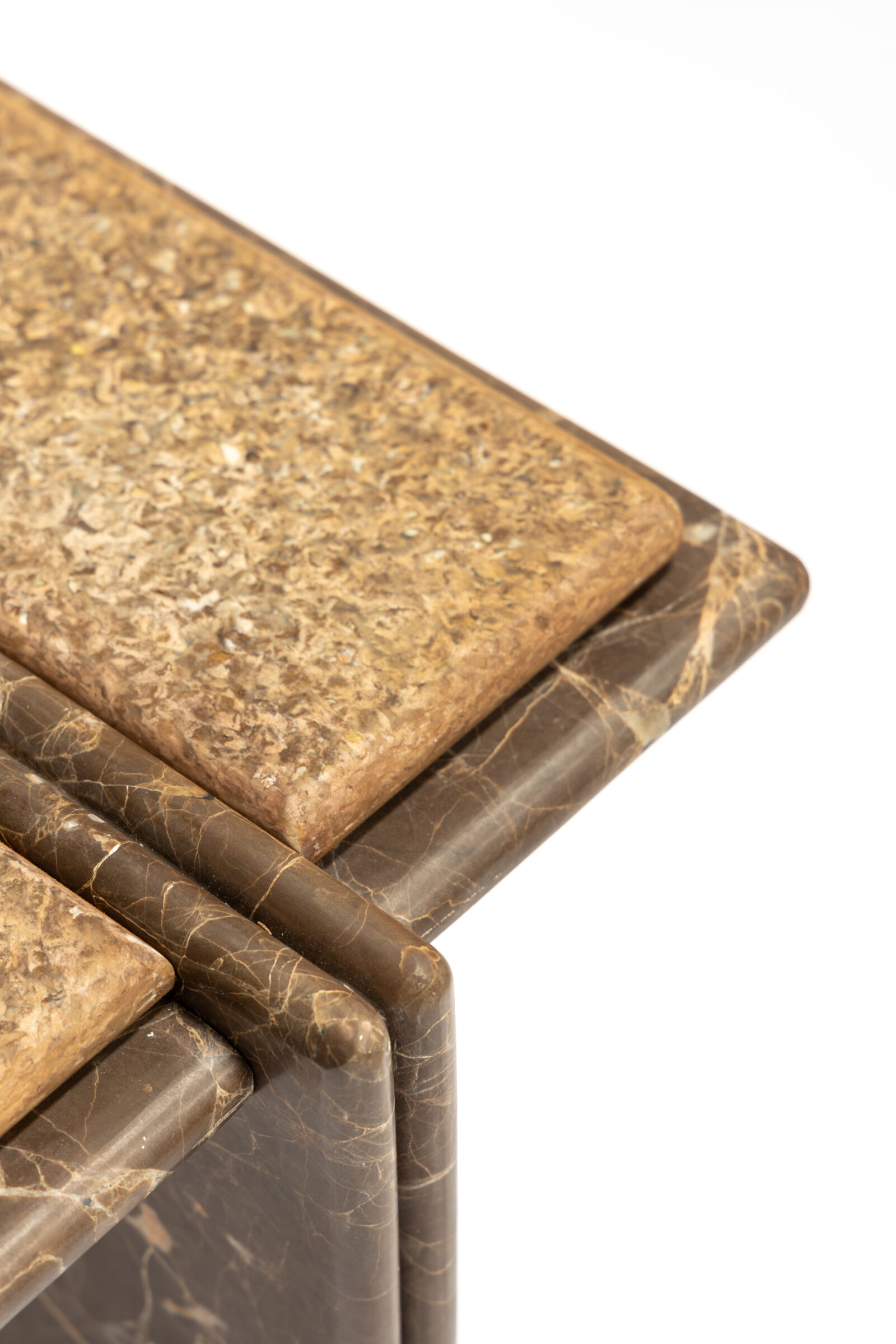
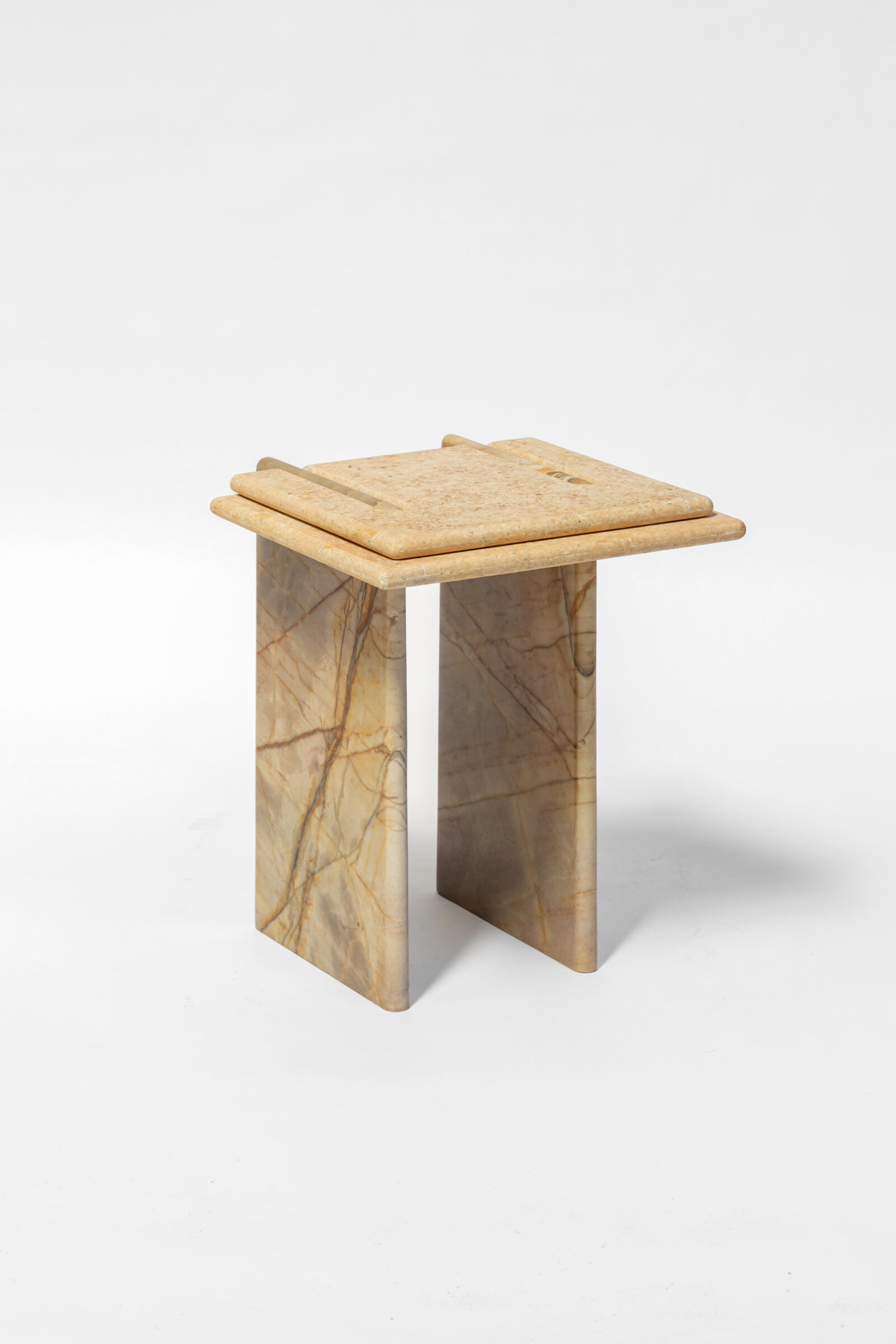
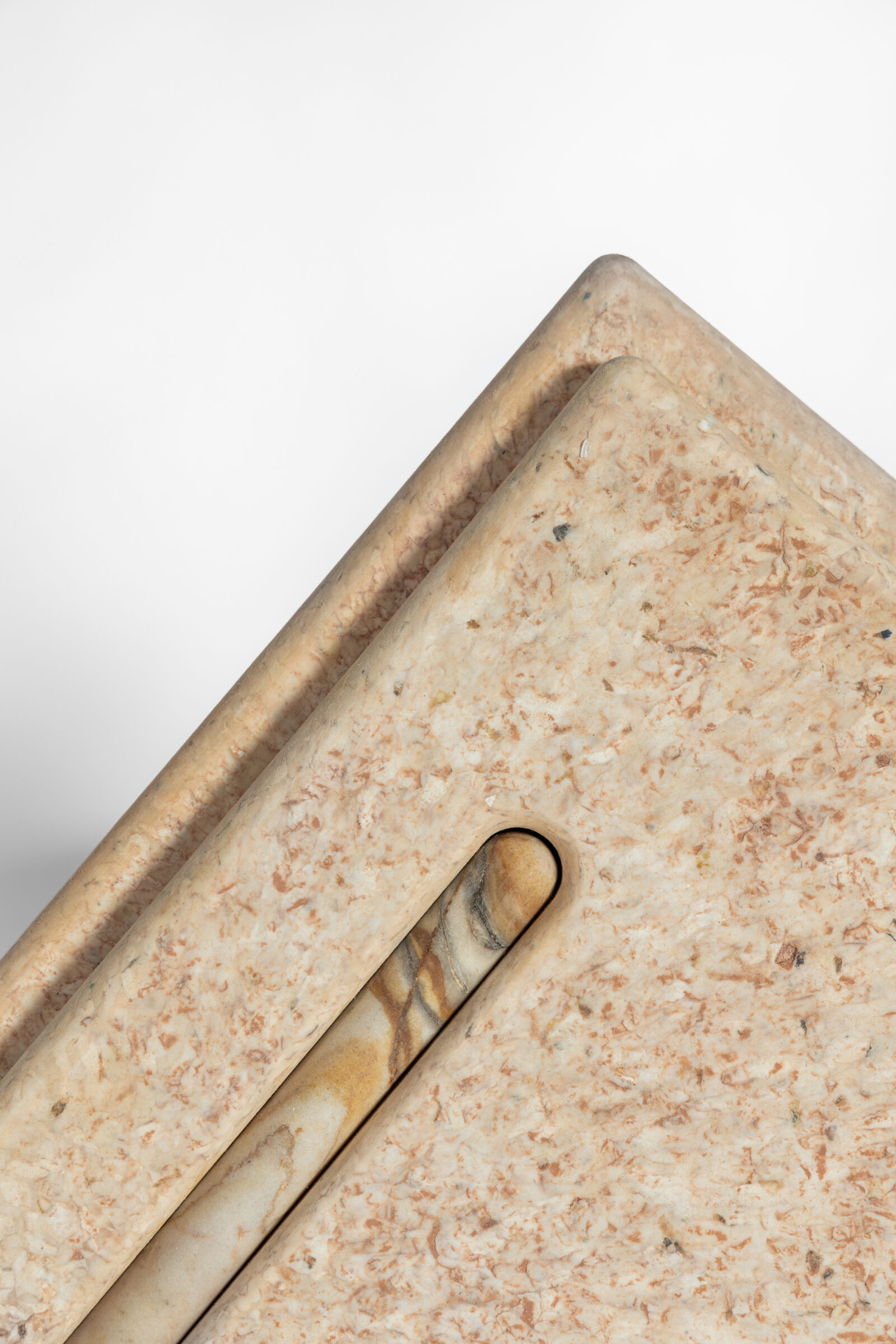
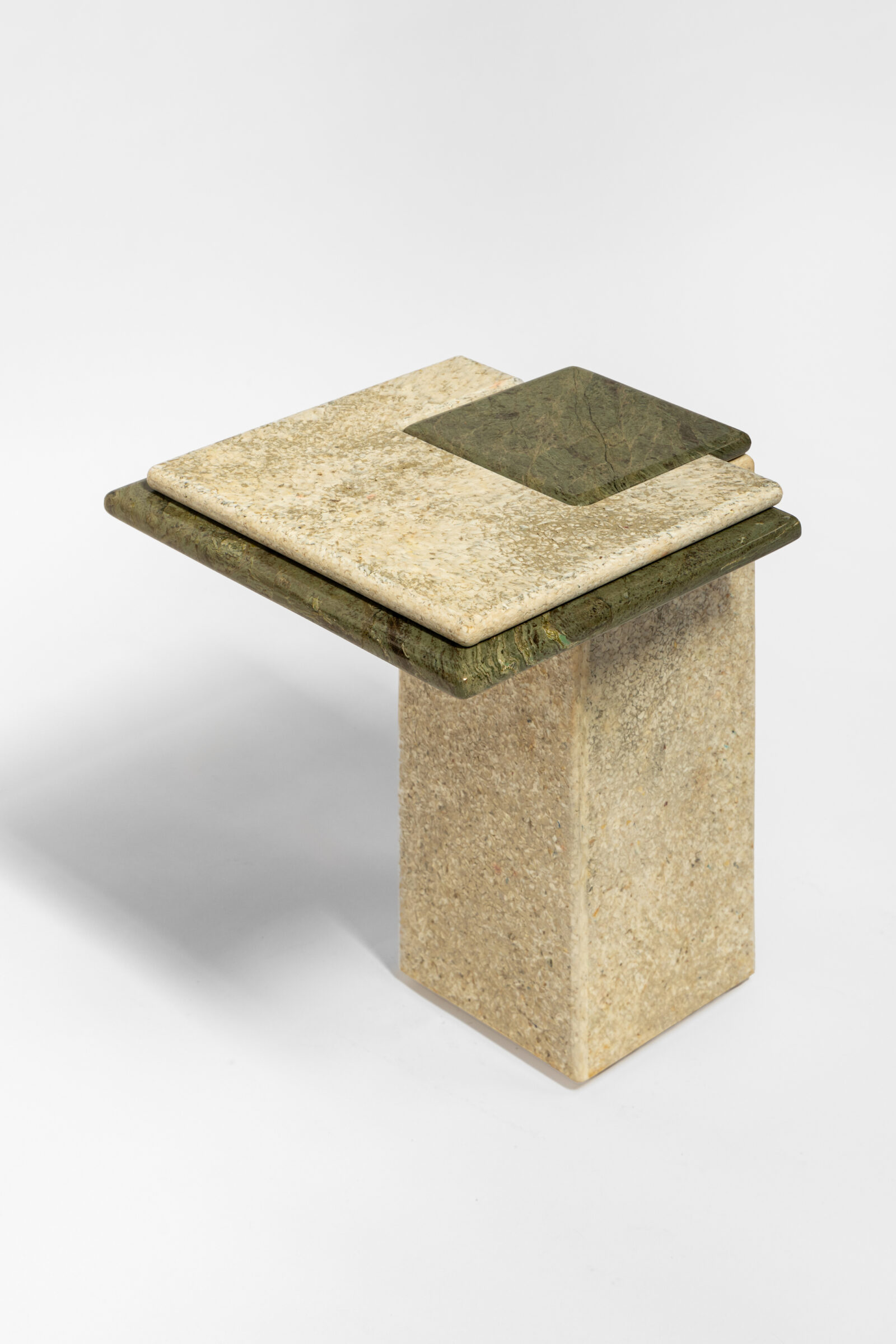
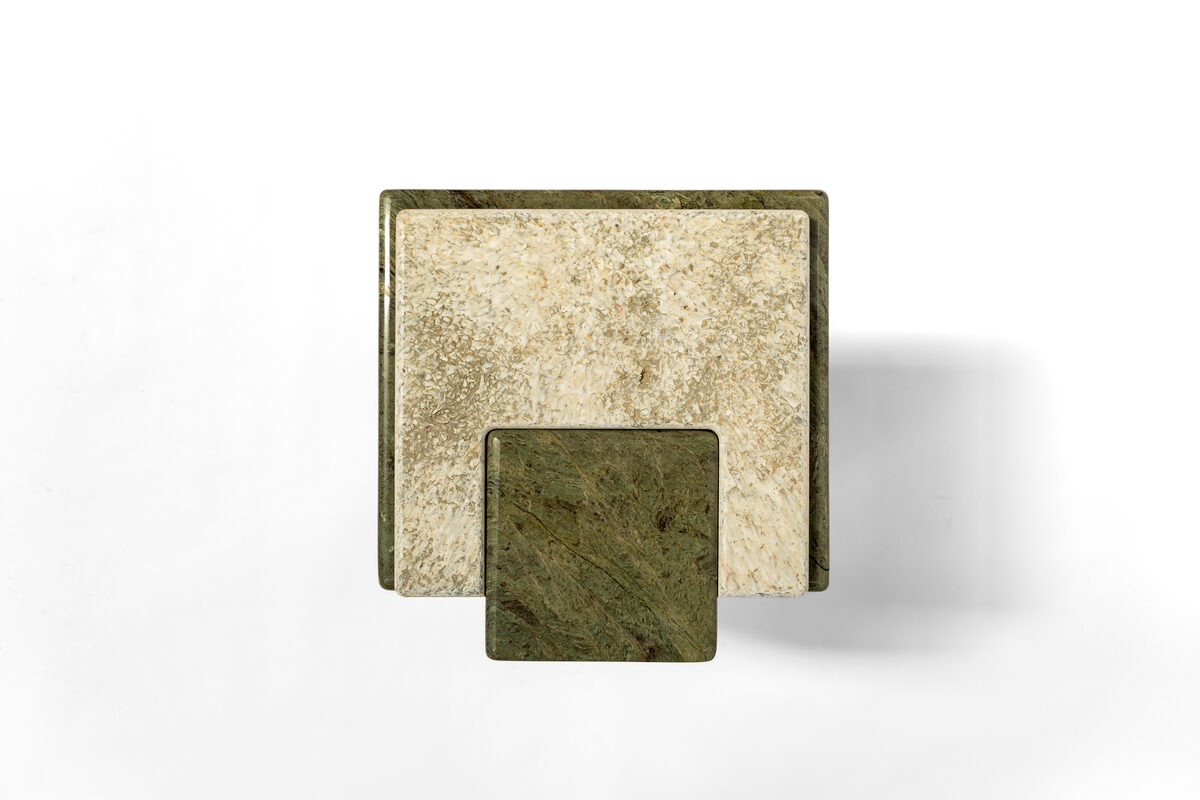
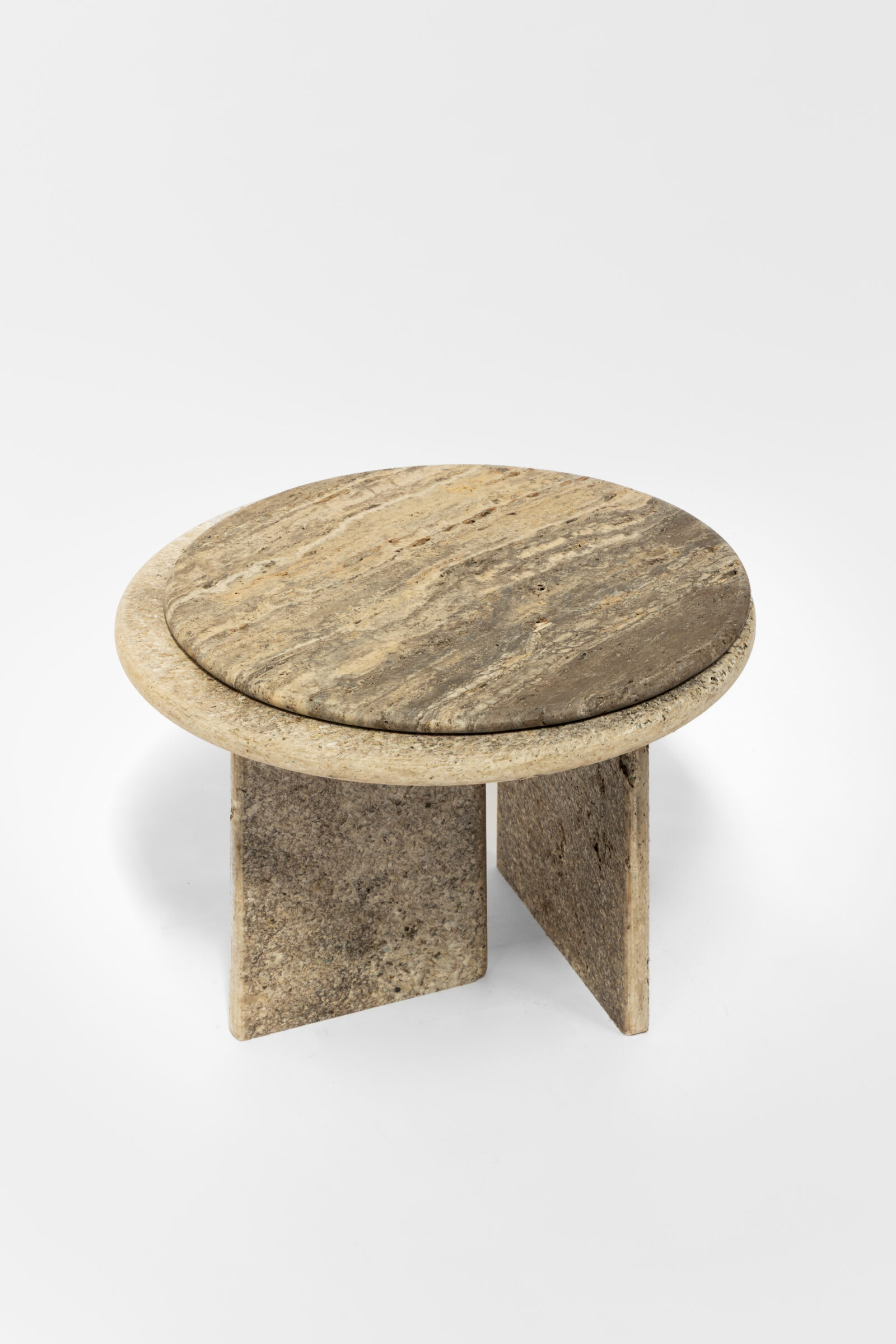
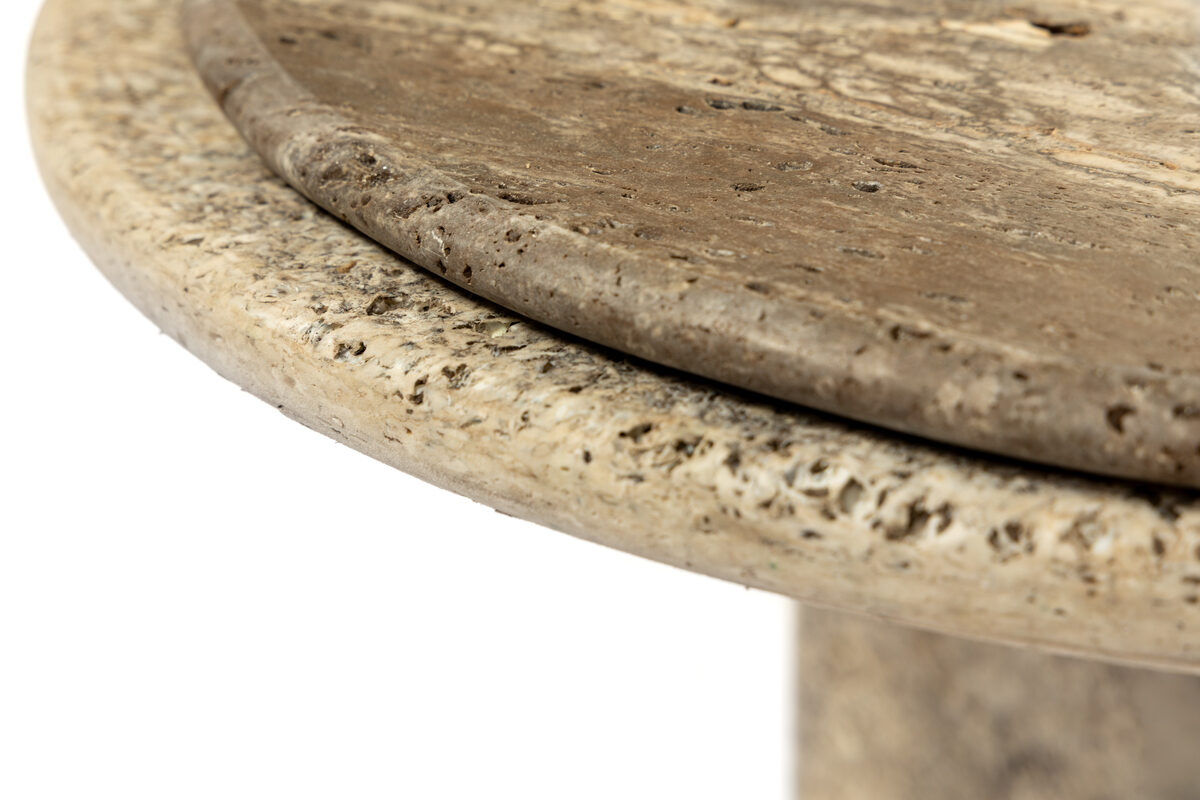
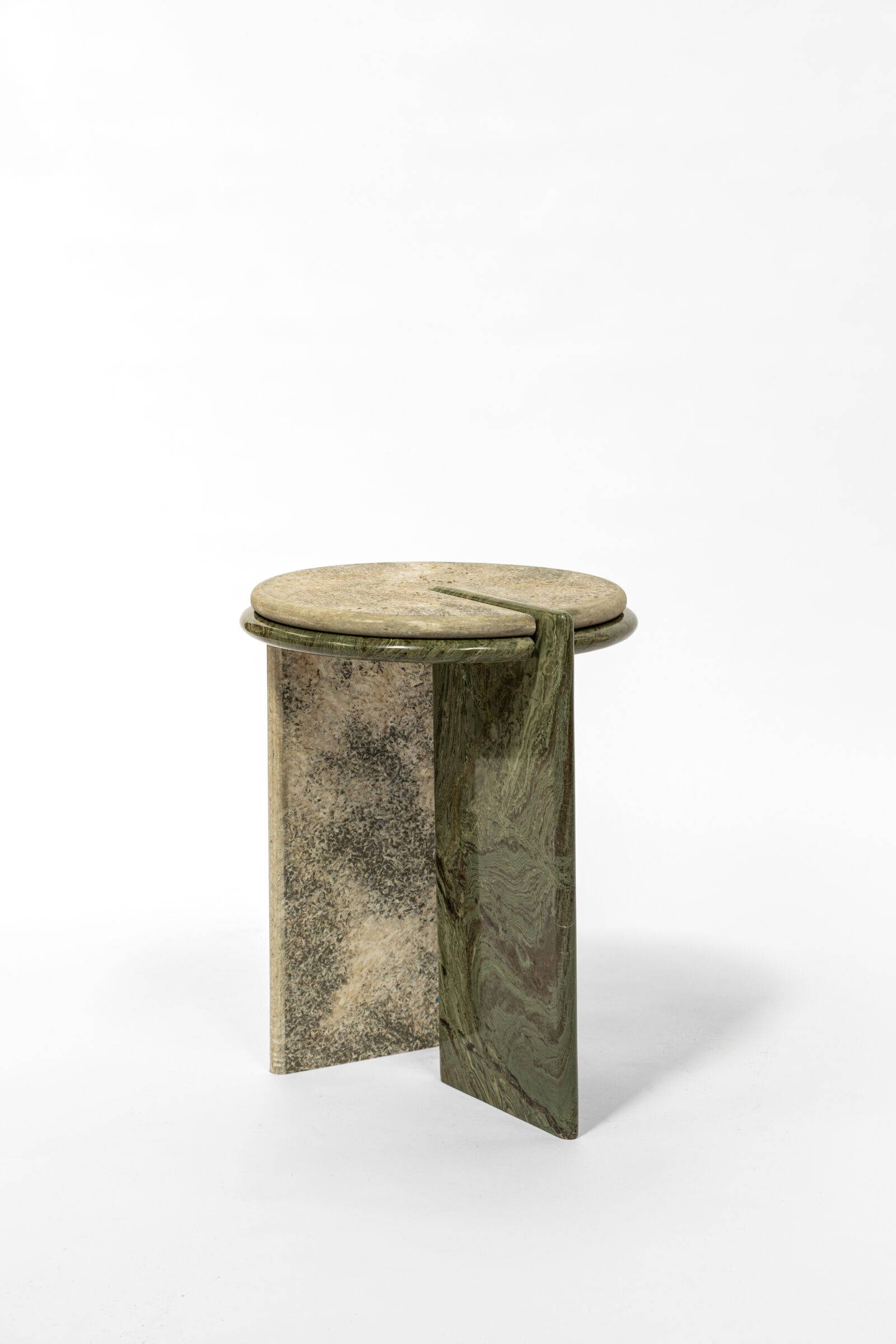
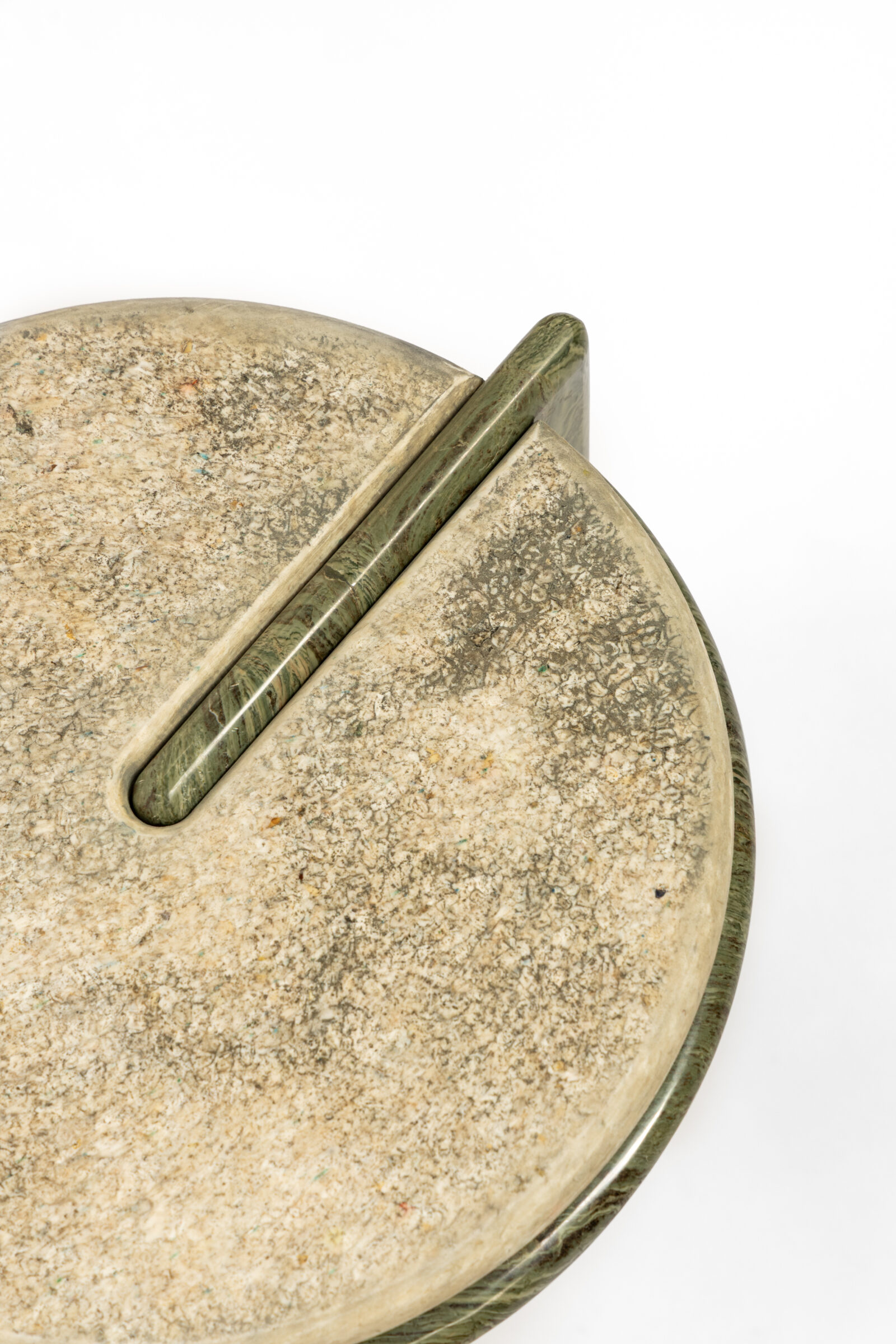
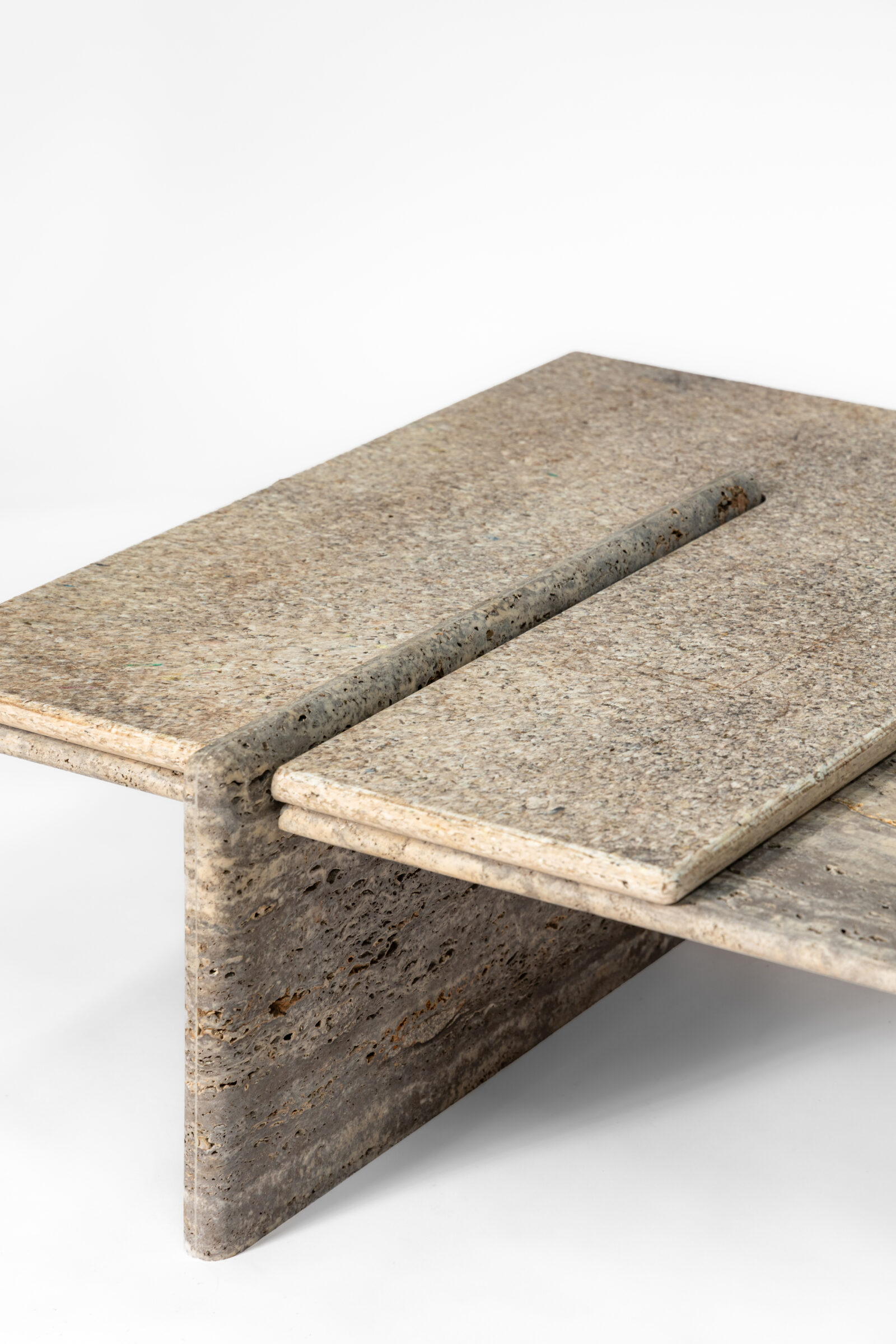
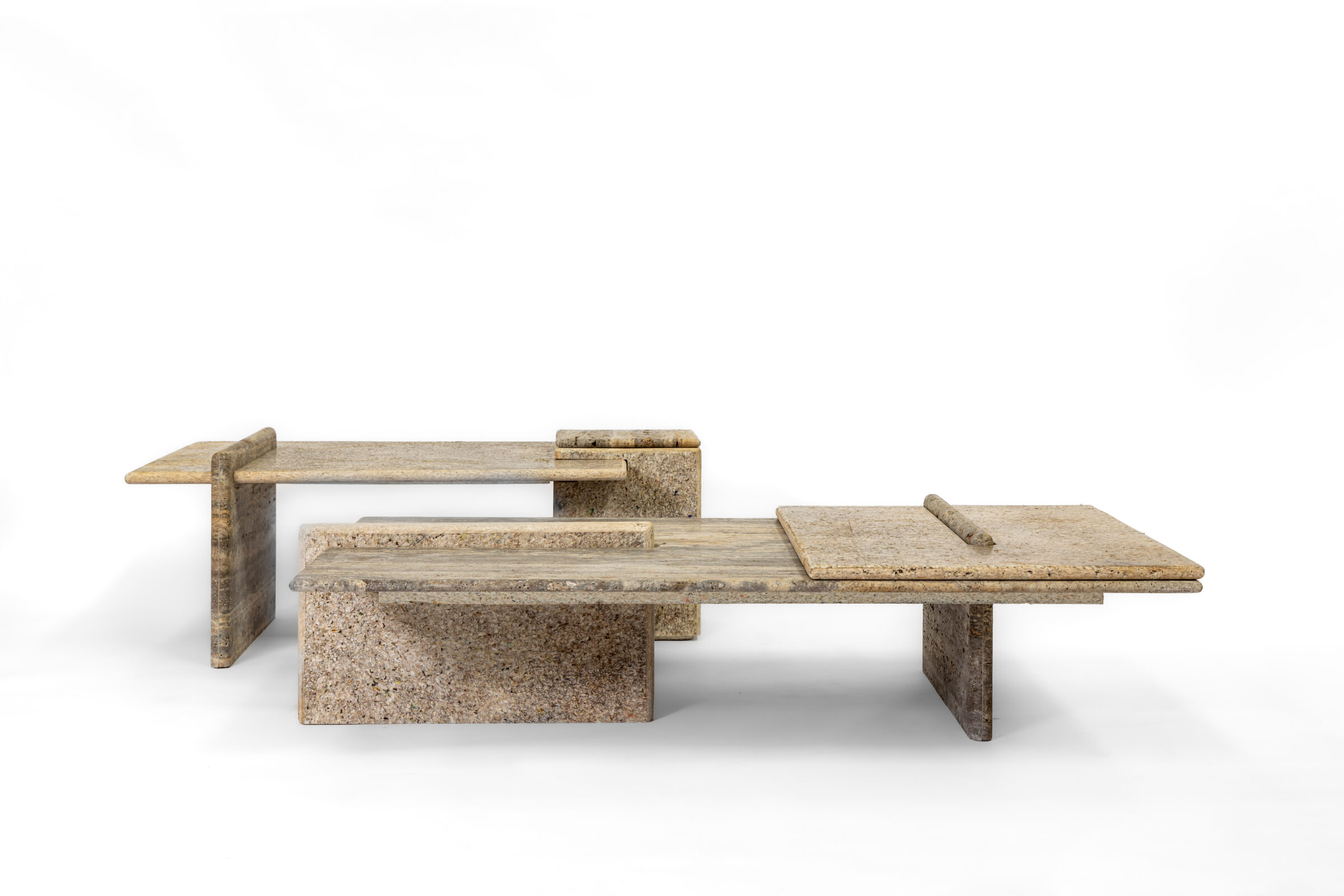
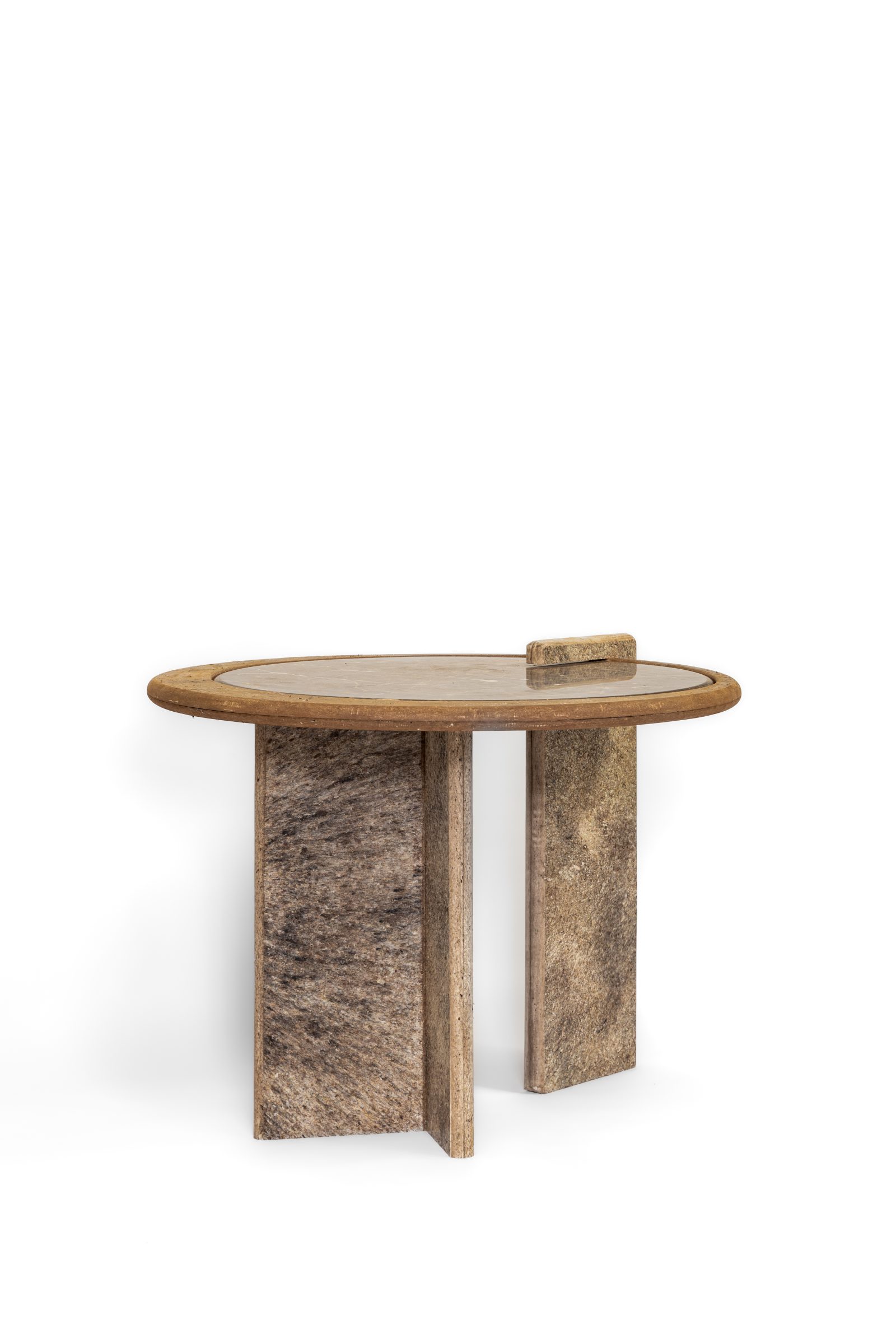
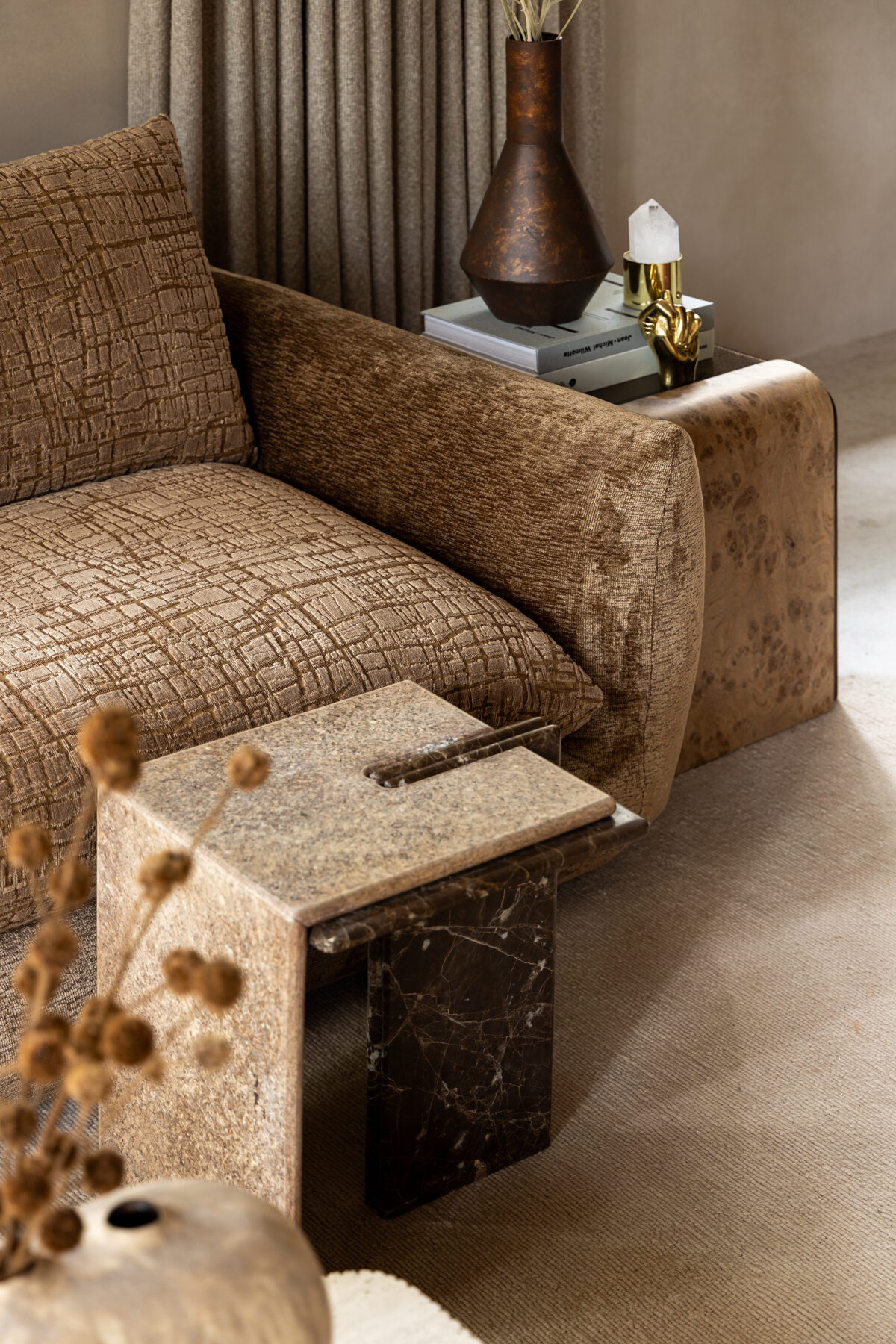
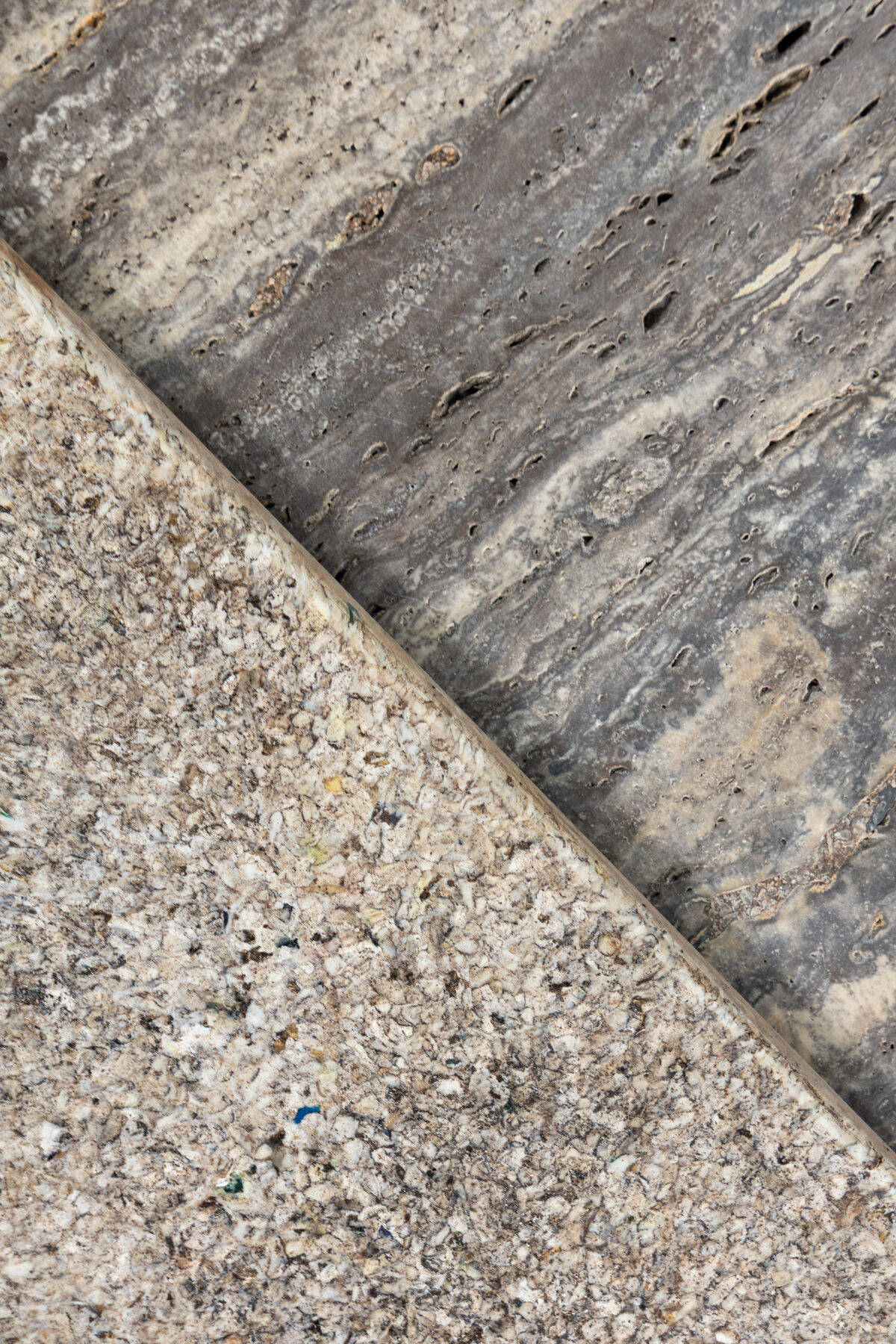
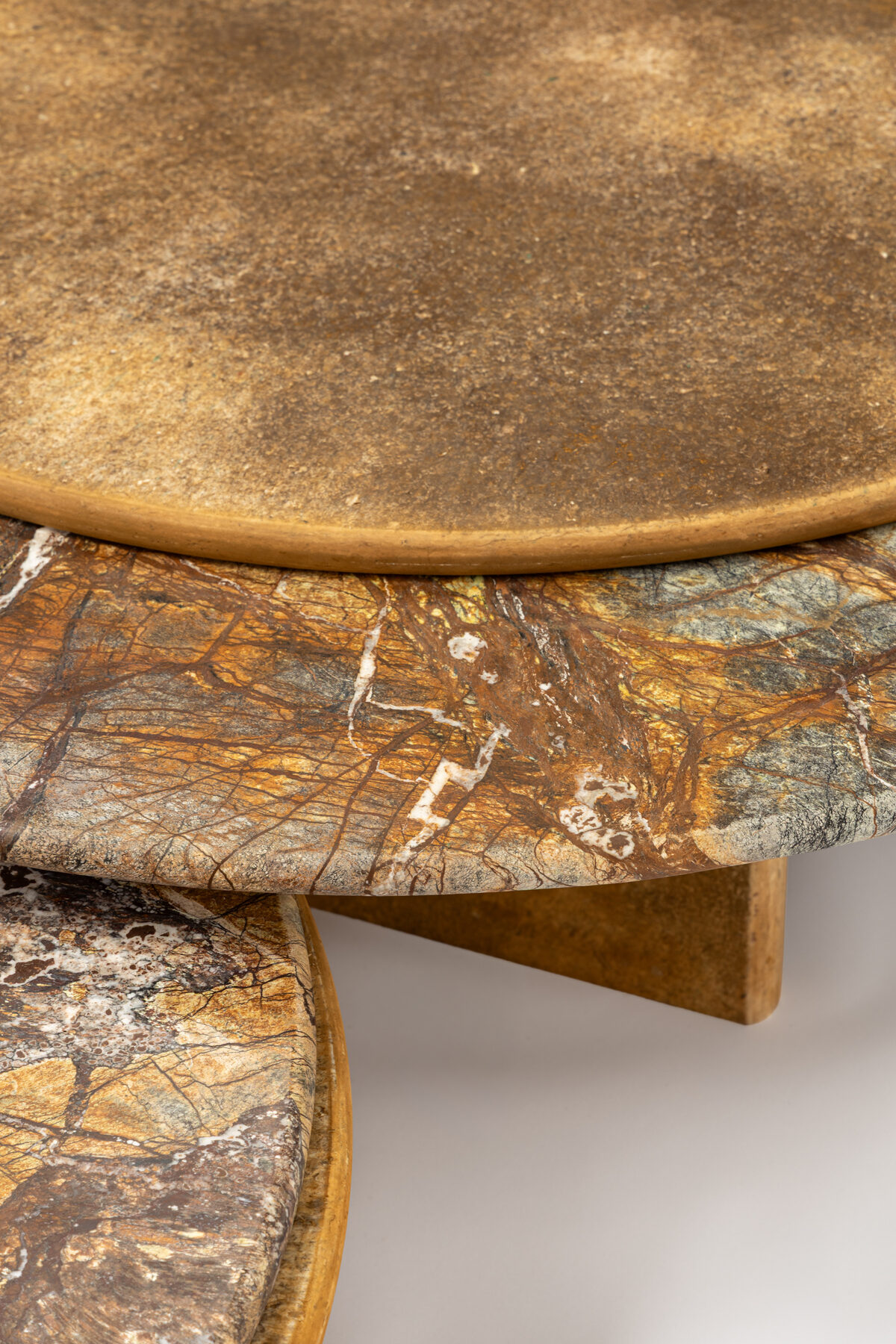
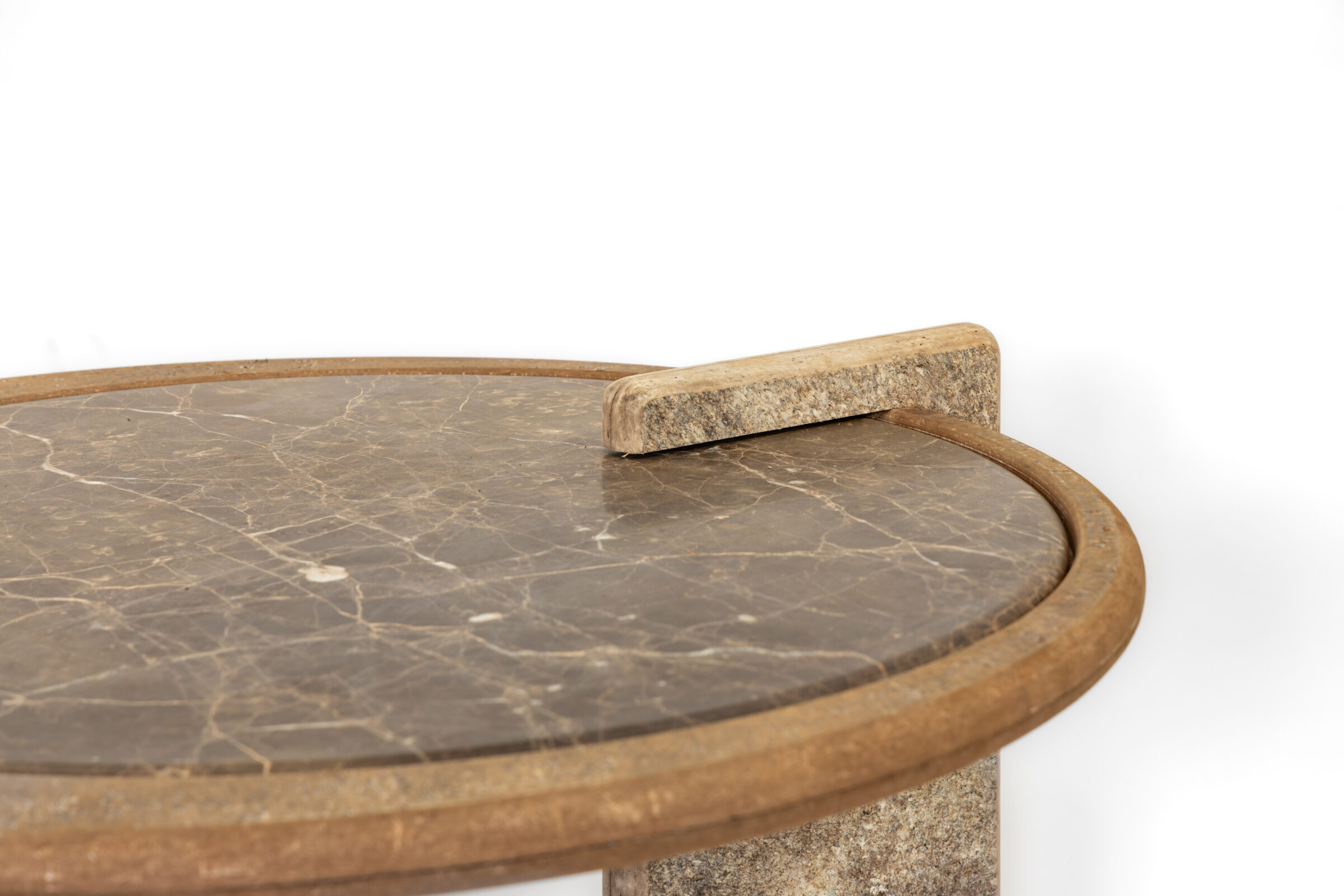
Neoterra | This new plastic is produced from post-consumer and industrial waste – caps, packaging, production offcuts – sorted by cooperatives, shredded and sieved. Each batch arrives with variations in color, composition and purity; no two slabs are identical, approximating the logic of natural stone. Pigmentation | The plastic is blended with a proprietary formula of mineral oxides and natural elements – turmeric, pepper, clays – that shift color, density, texture and porosity. Distribution of the mixture and compression conditions are sensitive variables; the process is closer to alchemy than manufacturing. Construction | Fused and compressed into slabs, the material is then cut, sanded, perforated and reassembled. Joints are bonded by heat, with invisible fixings and structural integrity. Stone composition | The tables are engineered to support 50 kg, maintaining visual continuity between two surfaces of distinct density. Tone, pattern and edge are calibrated for each composition.
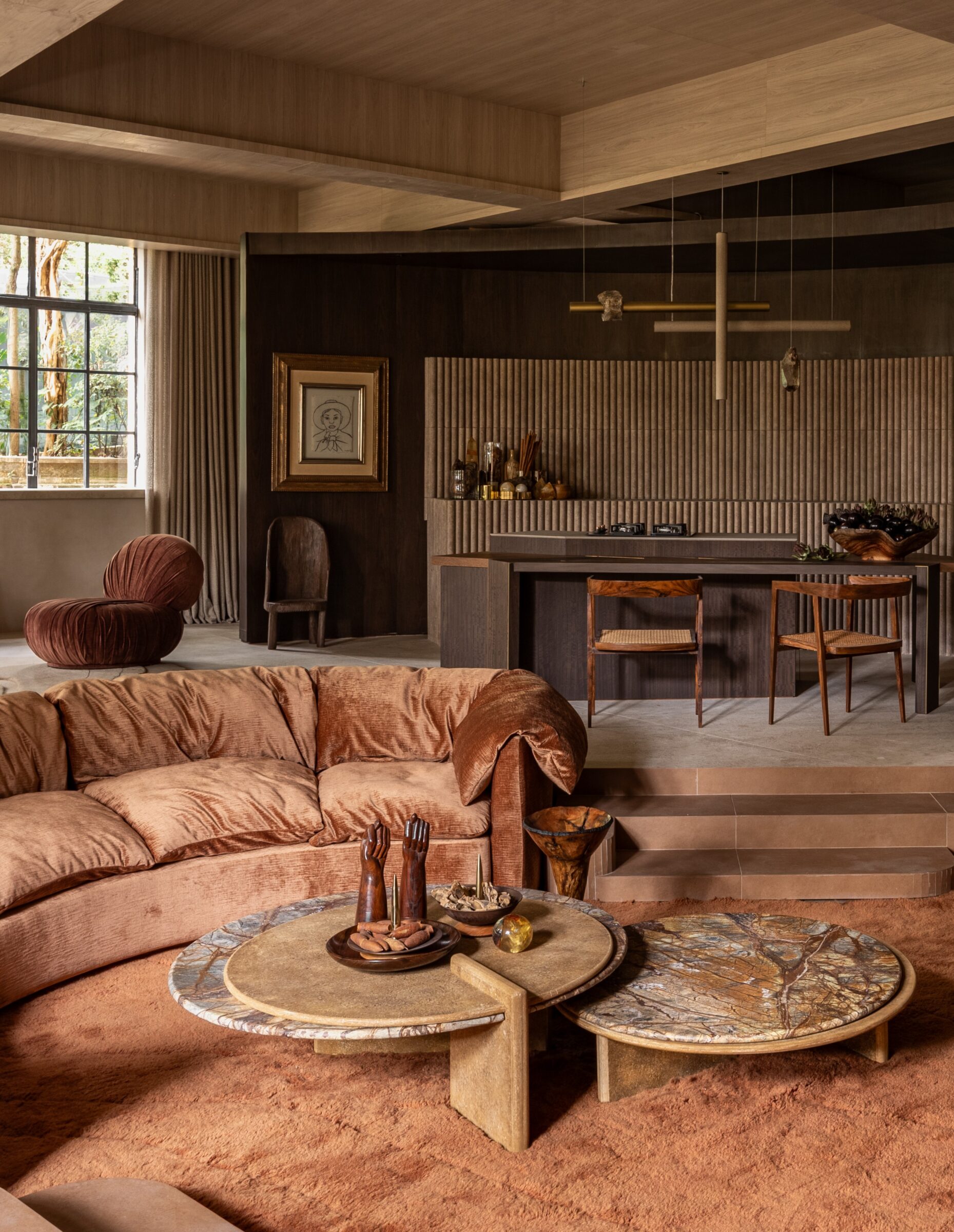
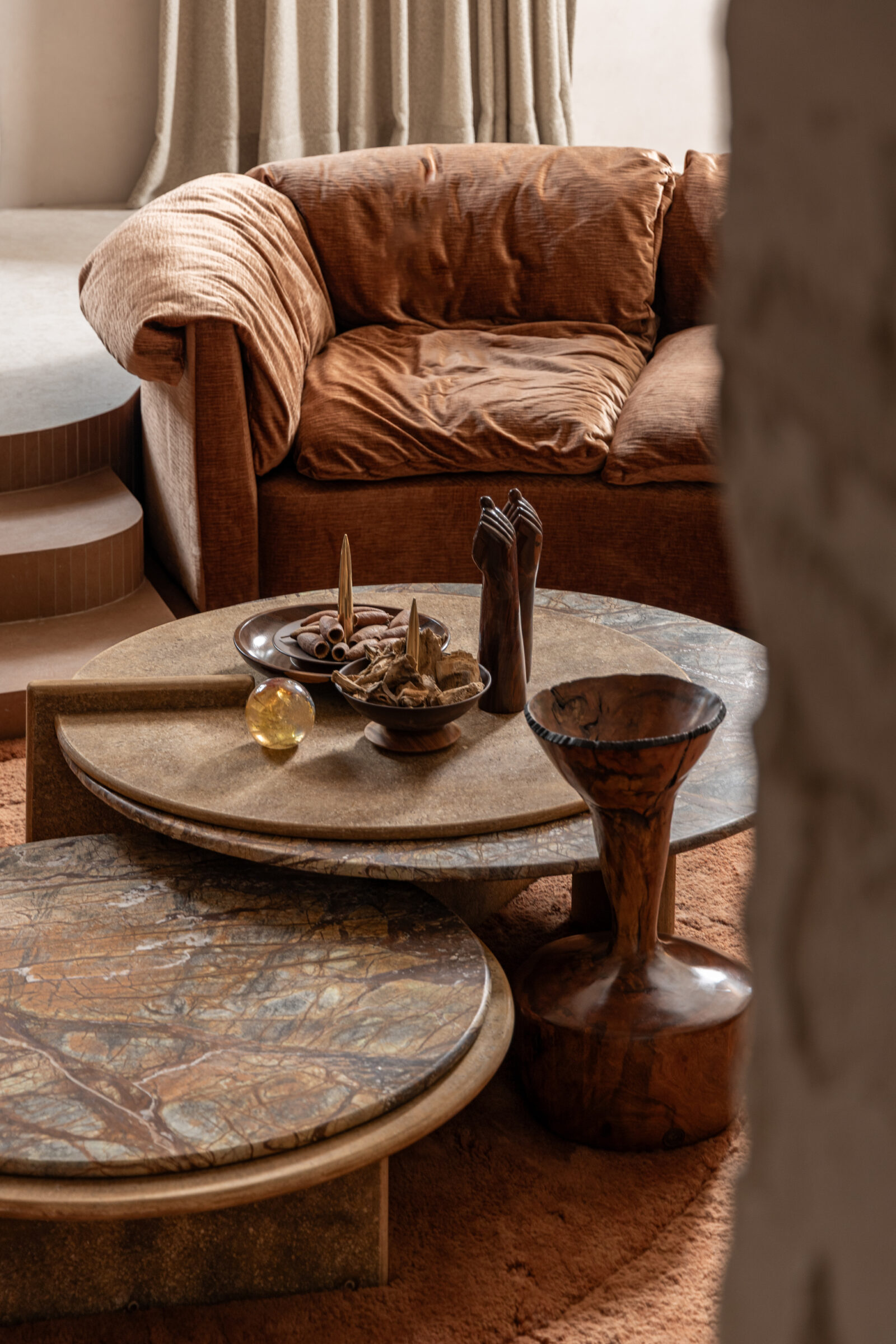
IN.verso (from inverso, "inverse" in Portuguese) begins with a reversal. Plastic is the symbol of mass production; a material so resilient it outlasts everything, and yet, treated as disposable. The designers had long searched for a way to bring sustainability into high-end market without aesthetic concession. The answer came through neoterra – their shredded, recycled plastic, pigmented with mineral oxides and natural elements: açafrão (turmeric), pimenta (pepper), argila (clay). These colorants alter density, texture, and surface under heat and compression, and give each table its name. Natural stone has long been central to their practice, but IN.verso does not abandon it. Instead, it is placed in tension: slab offcuts and discards composed alongside the reprocessed plastic until tone, density and pattern align. The boundary between the two dissolves. What once read as refuse holds its own beside the precious. The table becomes the site where that inversion takes place.