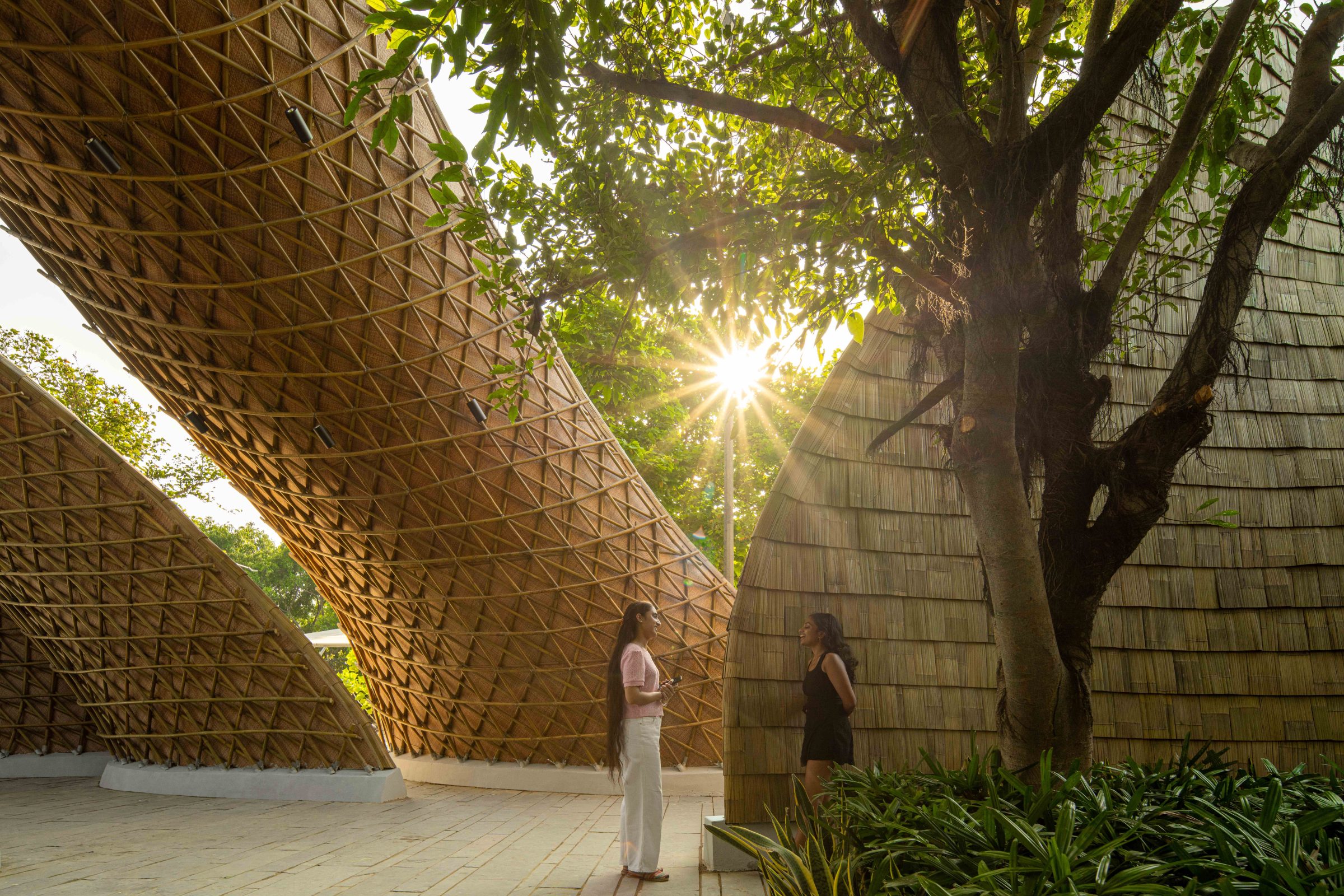
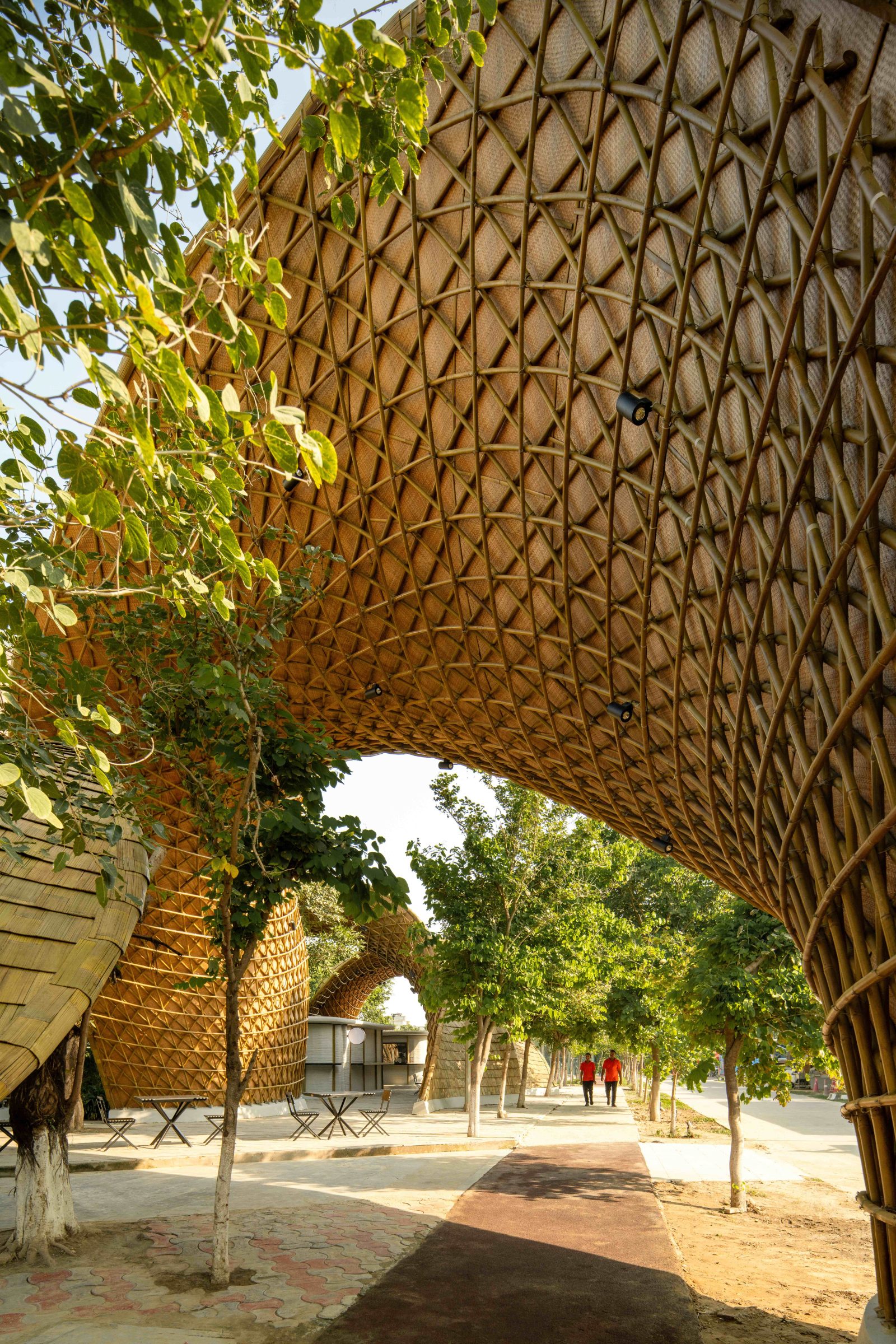
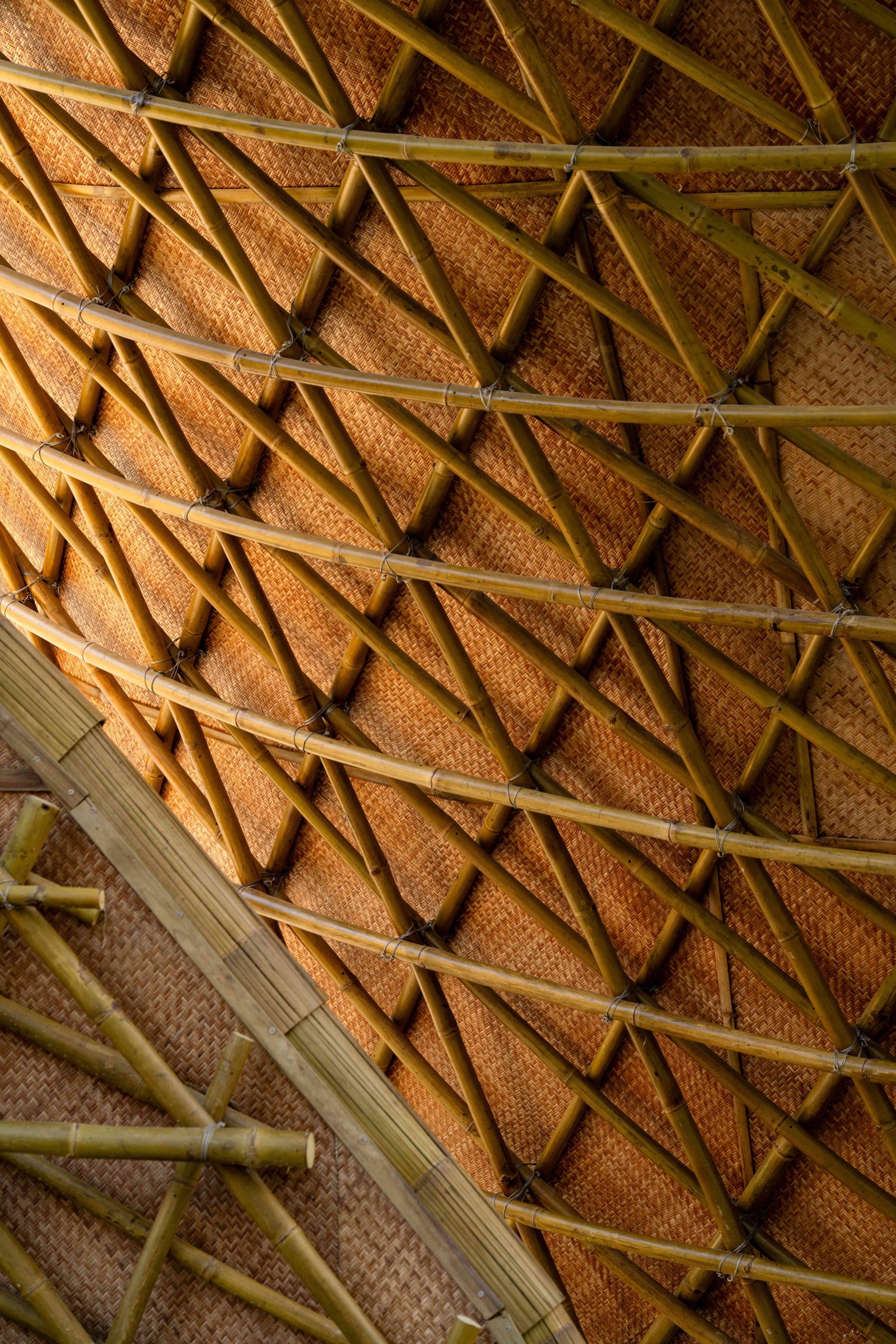
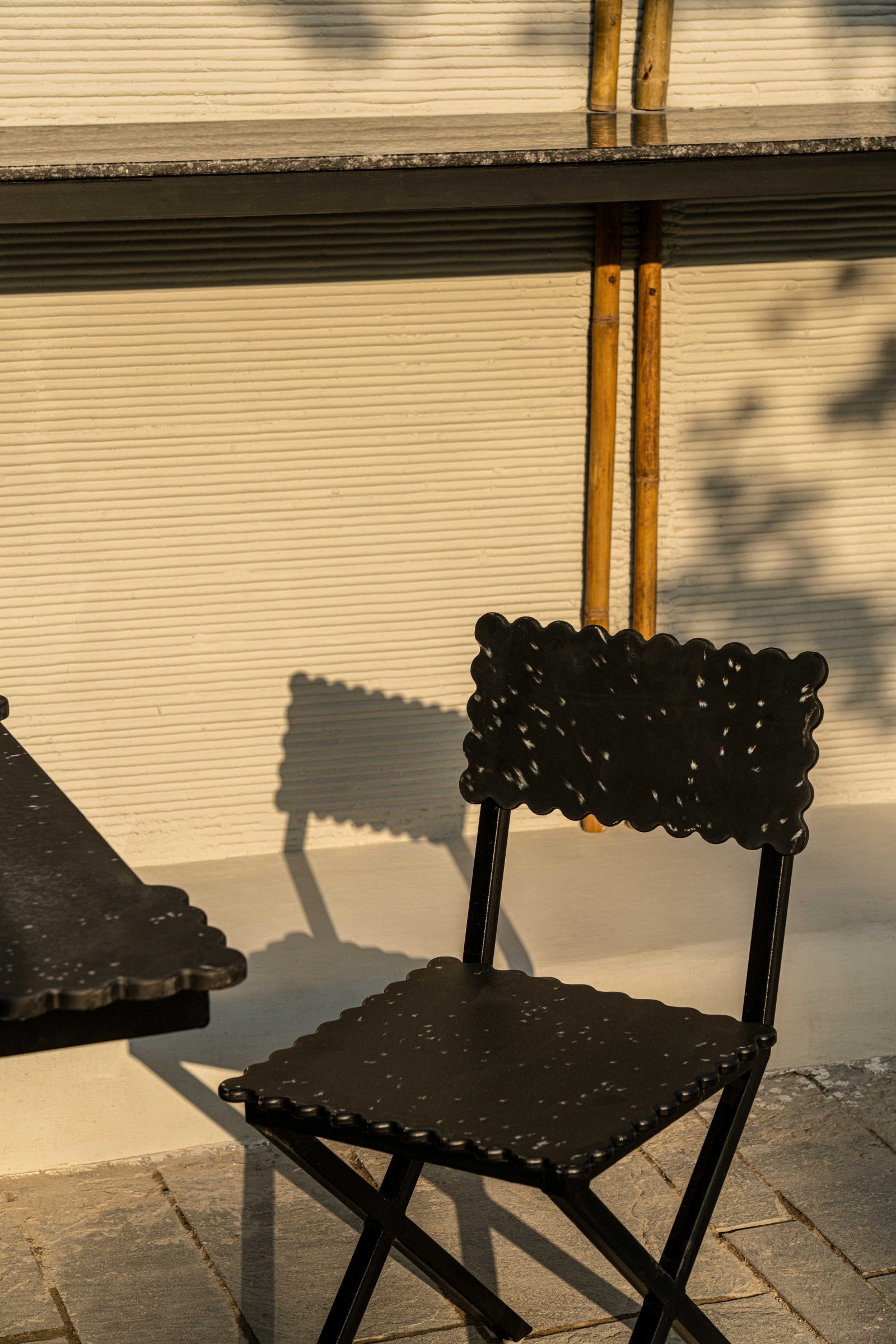
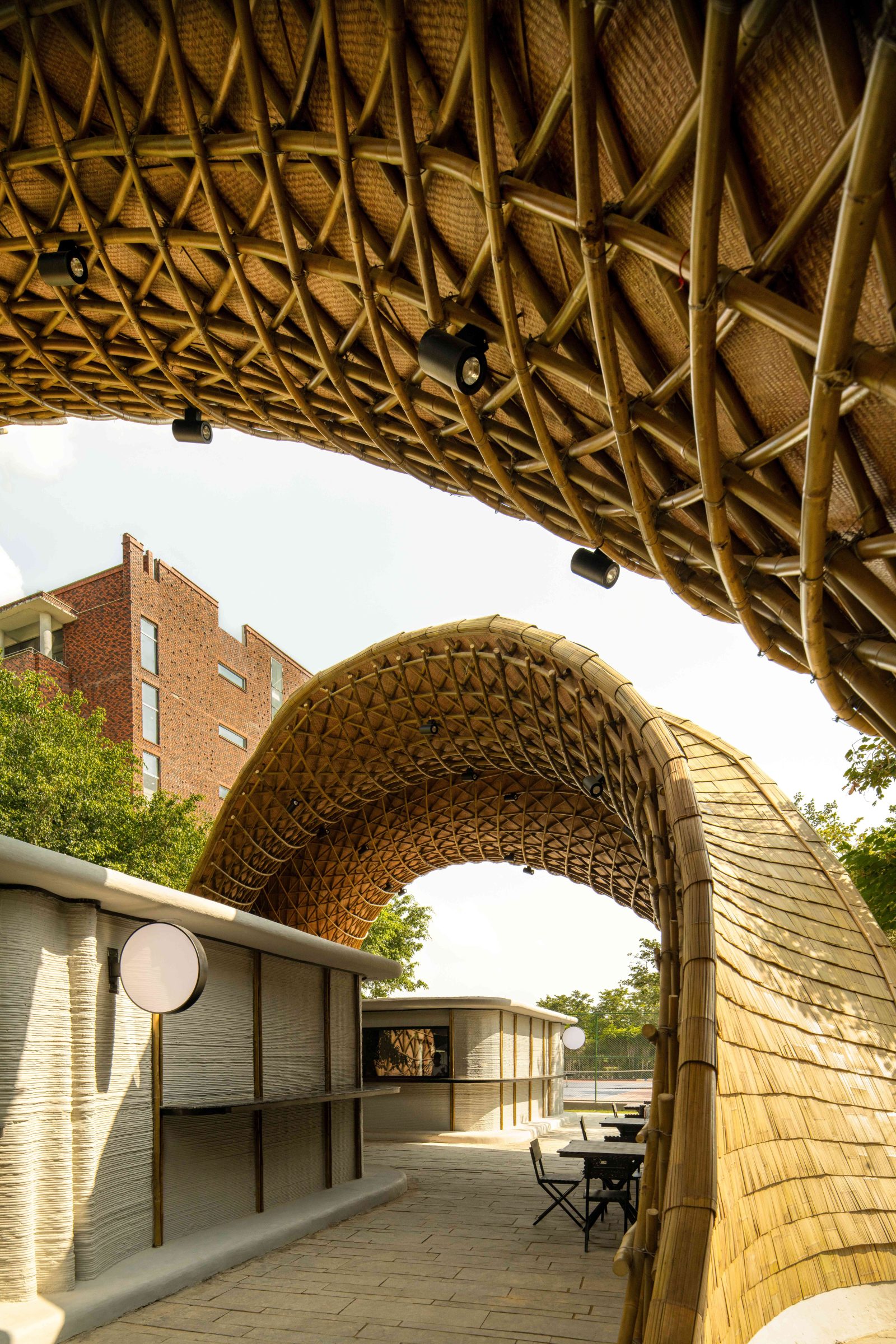
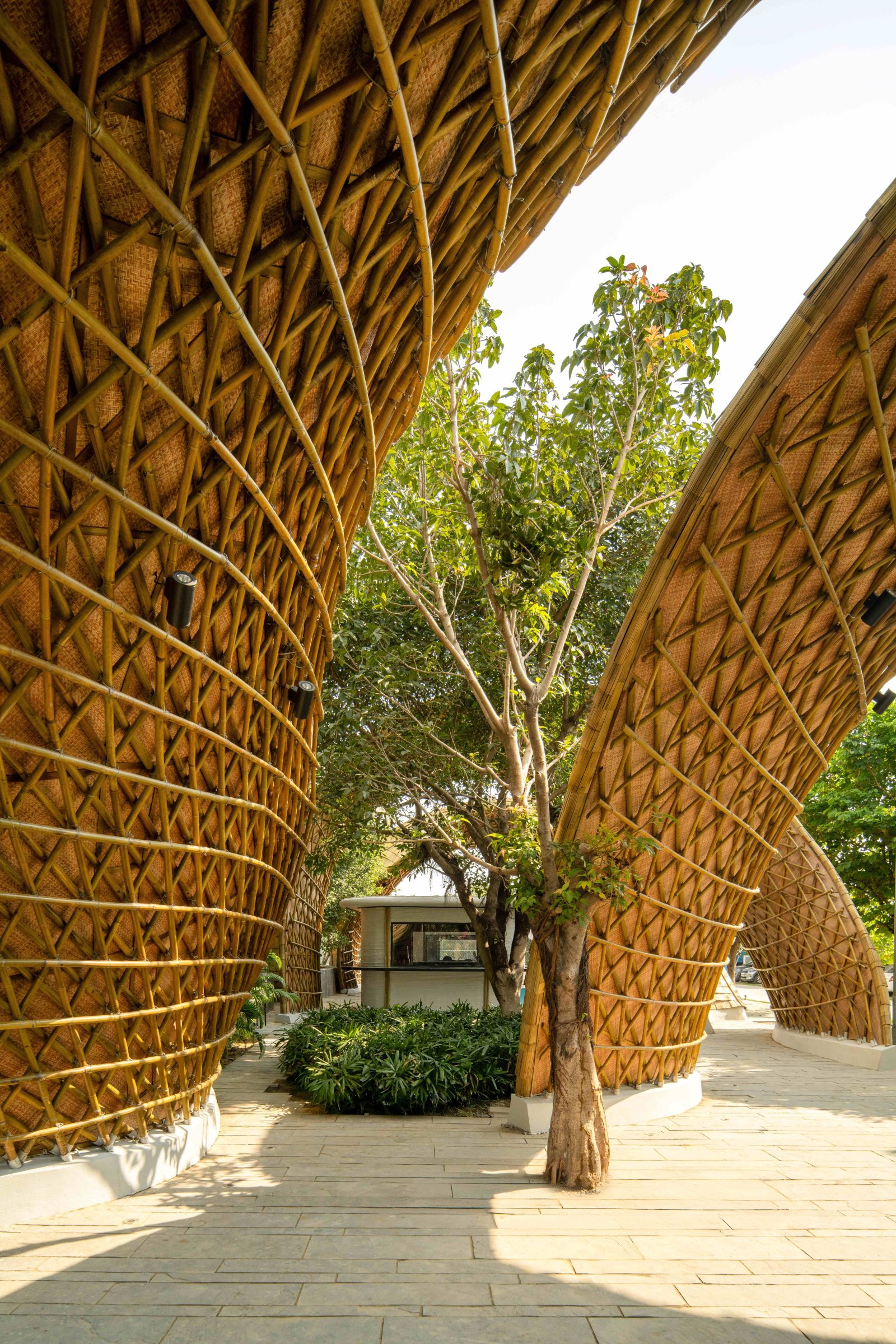
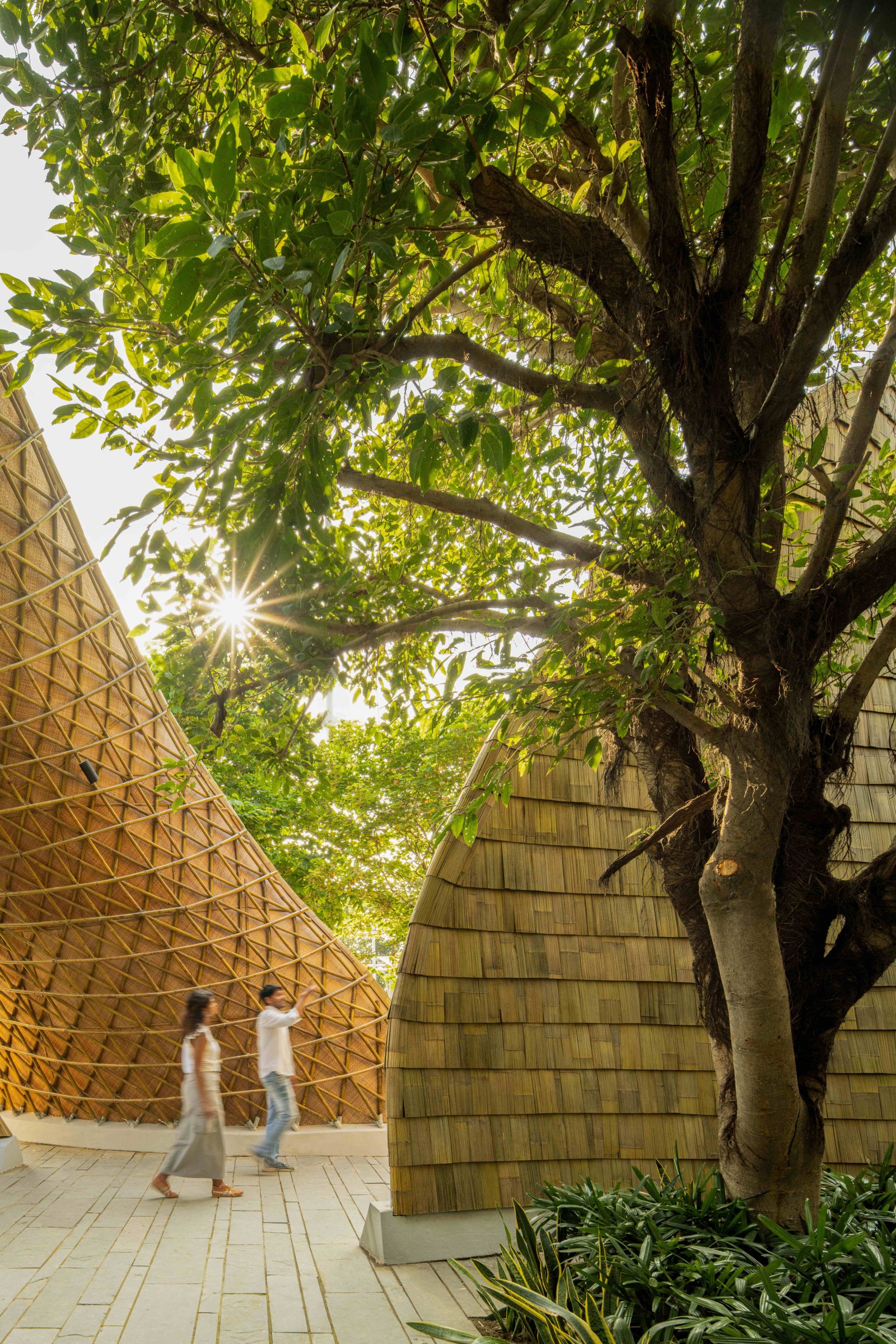
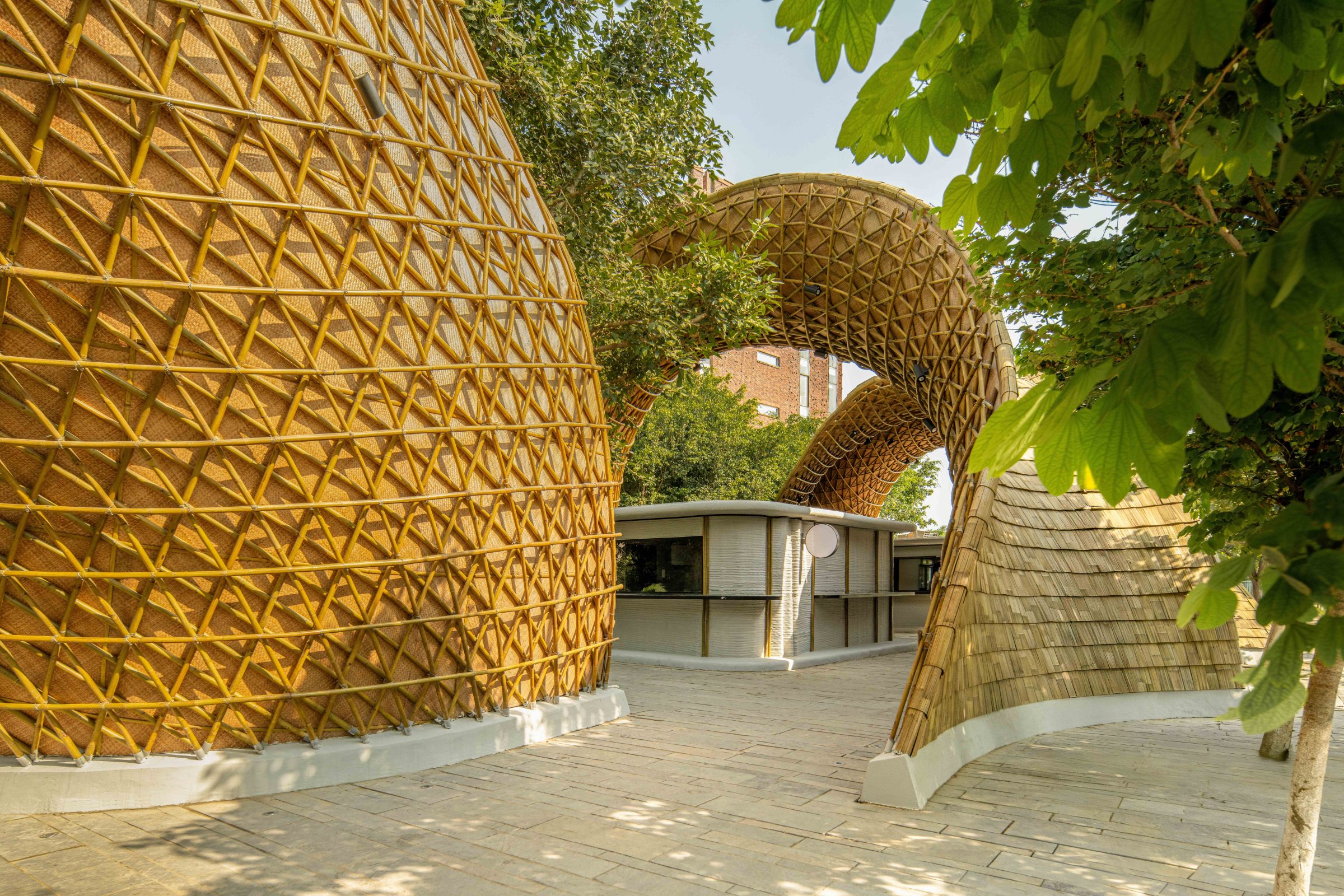
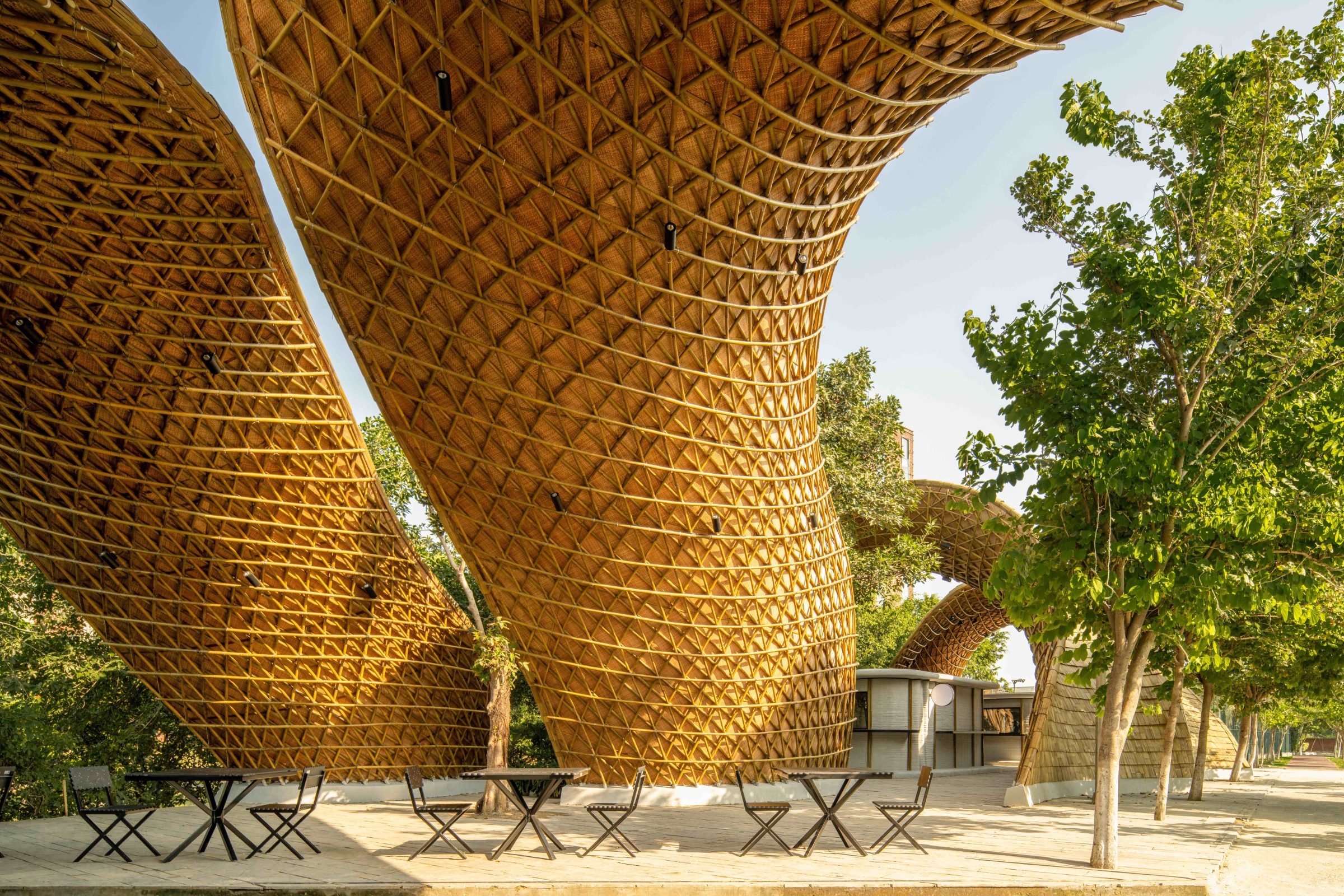
The project is organised as a series of bamboo gridshell canopies that create a shaded, open-air environment within the campus. Constructed using slender bamboo members arranged in a diagonal grid, the double-curved structures span up to 19 metres while working with the material’s natural properties. Crushed bamboo mats are layered above to provide additional shading and thermal comfort. Beneath the canopy, modular kitchen units are fabricated using 3D-printed concrete, allowing precise construction with reduced material waste and efficient assembly. Furniture made from recycled plastic is integrated throughout the space, contributing to durability and circular material use. Together, these elements combine traditional craftsmanship and digital fabrication, creating a cohesive system that supports everyday use while responding to climate and context.
The Hungry Caterpillar reimagines the food street at Ashoka University as a vibrant, immersive campus space. The 650 sqm pavilion is built entirely from bamboo, demonstrating how natural materials can shape contemporary architecture. Nestled beneath a canopy of trees, the structure creates a shaded, open environment that encourages students to pause, interact and connect. More than a food hub, this street is a living symbol of how design can nurture curiosity, community, and environmental care. Light on the ground yet structurally expressive, the pavilion transforms everyday campus life into a shared spatial experience. Inspired by the image of a caterpillar nestled within a cocoon, the project translates ideas of growth, protection and transformation into a spatial experience. The brief was to design a food street within the campus that would go beyond functionality and create a space with character, one that students would enjoy spending time in rather than simply passing through.